Golf Club Length Calculator
Two tape measurements give you a conservative starting length, a practical trial range, and the checks that turn a number into a decision. Free, ungated, in inches or centimetres.
How to measure
Both measurements are taken standing tall on a hard, level floor in your golf shoes. Get a helper to hold the tape if you can.
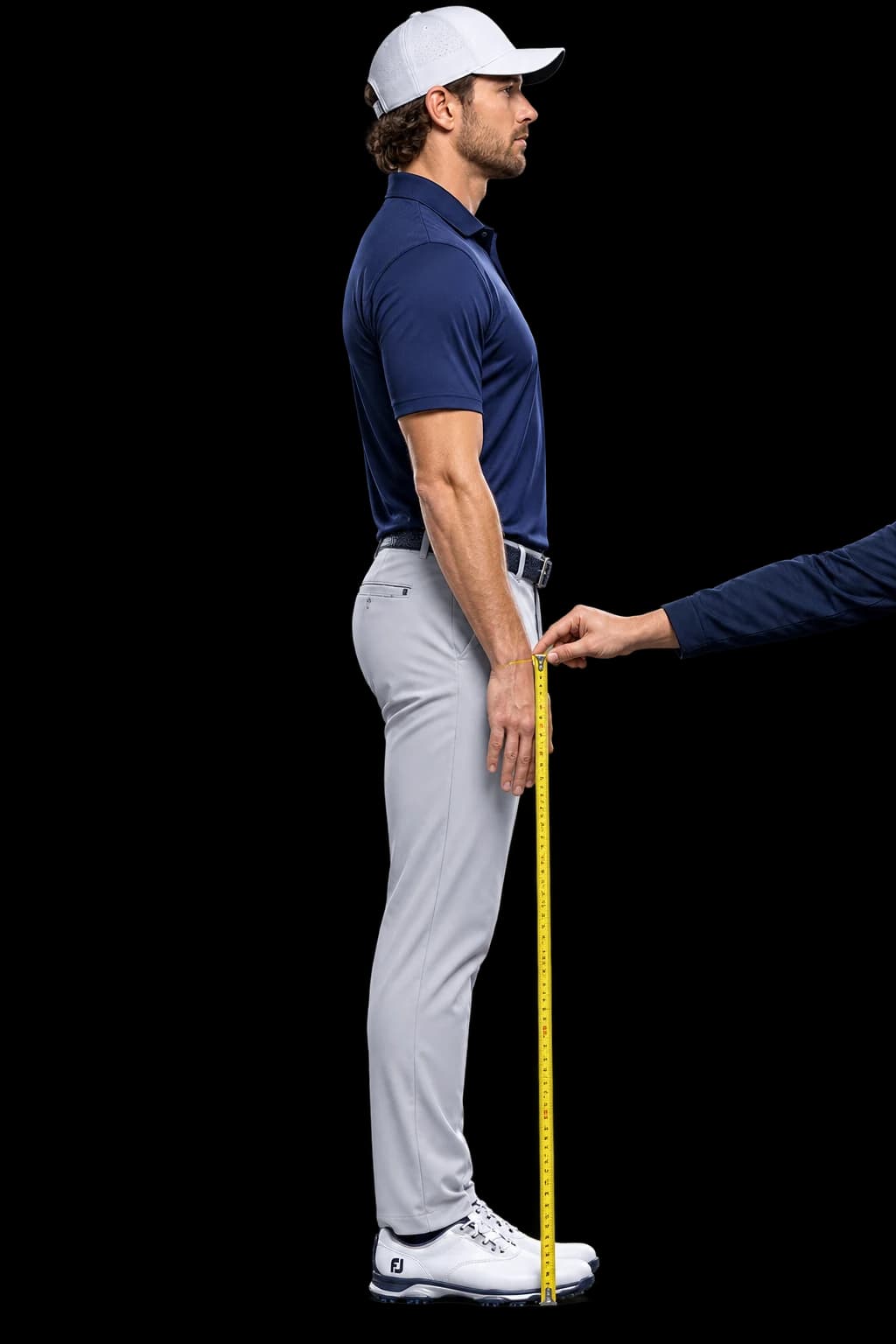
- Height. Stand against a wall, heels together, no cap. Measure from the floor to the top of your head. Golf shoes on, because that is how you stand over the ball.
- Wrist-to-floor. Let your arms hang loose at your sides. No shrug, no reaching down. Measure straight from the crease at the base of your wrist (where the hand meets the forearm) down to the floor. Not the fingertips: they hang about 7 inches lower and would produce a badly wrong answer.
- Repeat it. Shake your arms out and take a second wrist reading. The calculator averages the two, warns if they disagree by more than half an inch, and checks the reading is plausible for your height.
How the estimate works
Height sets the primary estimate. Public static fitting charts, including the height and wrist-to-floor charts Tom Wishon Golf publishes and the generic charts most retailers use, all place a proportionate golfer between about 5'8" and 5'11" at standard men's length and step roughly half an inch for every three inches of height. This calculator models that as a straight line: 0.16 inches of length per inch of height either side of a 69.5-inch (5'9.5") reference. The line is checked against those charts, not copied from them.
Wrist-to-floor tells us about your arms, not just your hands. Standing wrist height is about 48.5% of stature in the classic body-segment data (Drillis and Contini, 1966), and fingertip height about 37.7%. The calculator compares your reading with the value expected for your height. Longer-than-typical arms nudge the estimate shorter, shorter arms nudge it longer, at 0.11 inches per inch of deviation. That weight is deliberately modest, because fitters disagree on how much arm length should change length versus lie. The same comparison catches unit mix-ups and fingertip measurements before they produce nonsense.
Rounding is honest, not precise. The headline is the raw estimate rounded to the nearest half inch, which is the step most sets are built in. The trial range is plus or minus 0.375 inches around the raw value, rounded to quarter inches, and it widens when two wrist readings disagree. There is no confidence percentage because a static method cannot justify one.
Club families are handled differently on purpose. The method was developed around irons. Wedges and hybrids follow the irons. Fairway woods and drivers are already long, and strike quality matters more than reach, so any "longer" result becomes a ceiling for them rather than a starting point. Putters are outside the method entirely. The Equipment Rules cap any club other than a putter at 48 inches, which no result here approaches.
Reading your result
The adjustment is relative to your set. Plus half an inch means half an inch longer than the length your irons were built to. It is not a finished length, because standard varies by brand and model. If you know your set's 7-iron spec, enter it in the optional field and the result shows a target.
The trial range is the real answer. The starting step is where to begin; the range is what to test. If you cannot test, the starting step is the conservative choice.
Lie and swing weight move with length. Longer plays more upright and heavier; shorter plays flatter and lighter. After any length change, read the sole mark and think about head weight. The lie angle check and the swing weight estimator cover both.
Juniors are different. Below about 4'10" adult standard-length assumptions break down. Use the junior sizing guide.
Verify before you buy or cut
The checklist inside your result tracks five checks. Two of them need a picture: reading the sole mark and reading the strike.
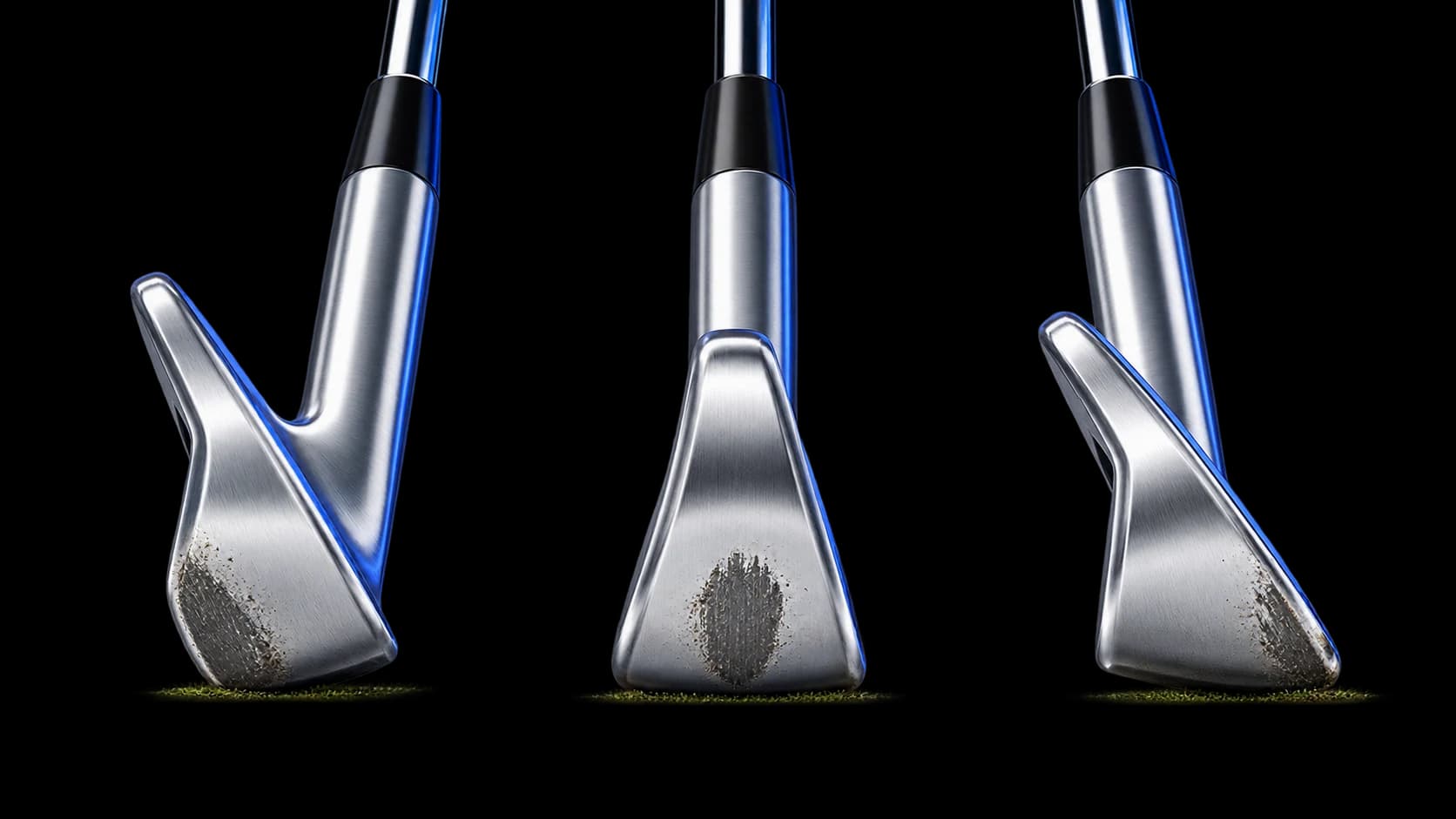
Sole mark
Tape on the sole, five to ten shots off a flat lie. Heel scuff: playing too upright (or too long). Centre: good. Toe scuff: playing too flat (or too short). Read the pattern, not one shot.
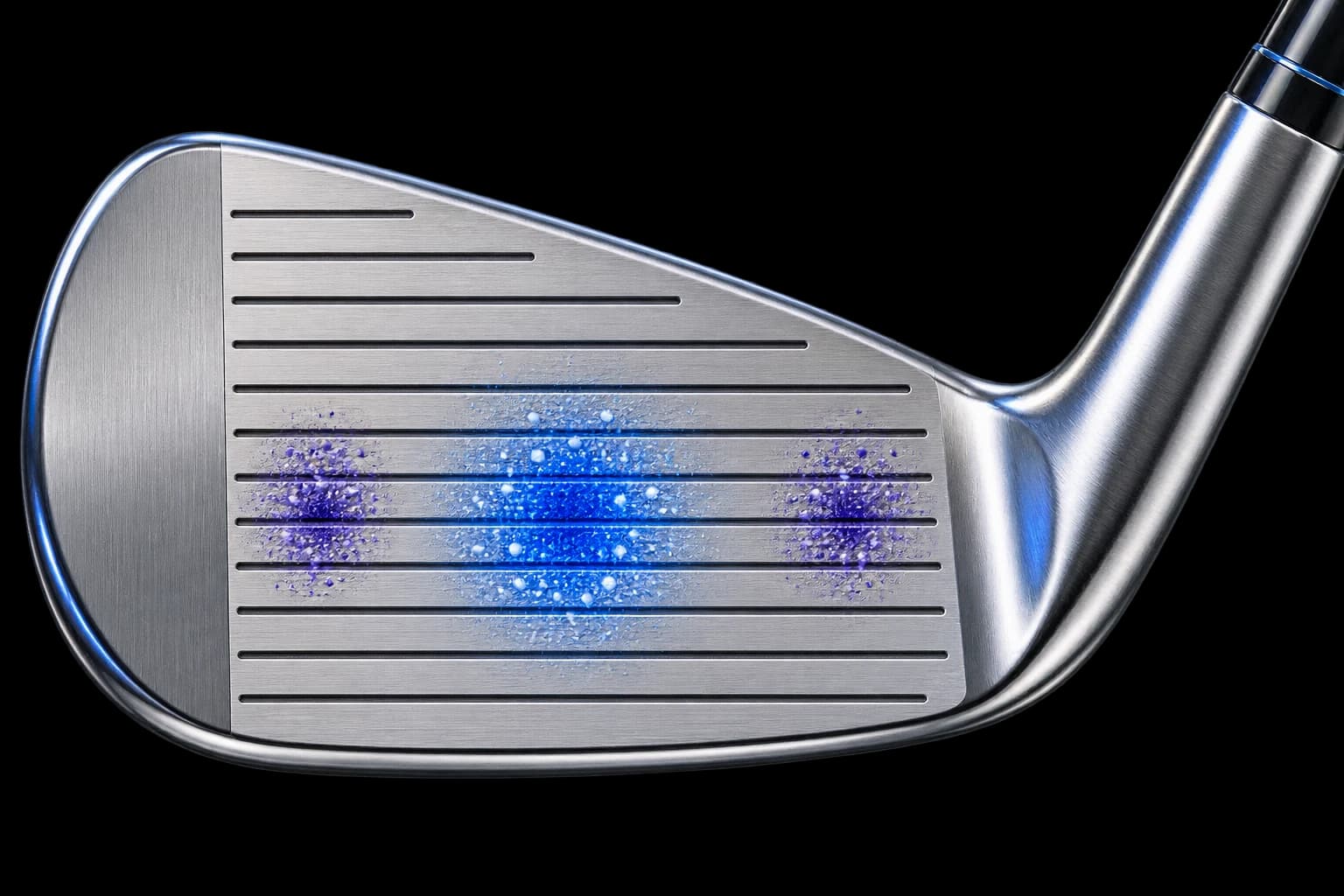
Strike location
Foot spray on the face, ten shots. A heel cluster often means the club is too long or you stand too close; a toe cluster the opposite. Centred and repeatable is what you are fitting for.
Questions golfers ask
Is this a club fitting?
No. It is a static starting estimate from height and wrist-to-floor. A fitting watches you hit balls and measures strike, launch and dispersion. Use this page to arrive at a fitting, or a trial session, with a sensible starting length and a range to test.
Why does the result show a range, not one number?
Two tape measurements cannot resolve length better than about half an inch, and published static charts disagree on how much wrist-to-floor should change length rather than lie. The range makes both uncertainties visible instead of hiding them behind a decimal.
What does "standard length" mean?
The stock men's-spec length your set was built to. It varies by brand: a 7-iron is typically around 37 inches but can be a quarter inch either side, and drivers range from 45 to 45.75 inches. The result is an adjustment relative to your set's standard, so check the manufacturer's spec sheet or enter it in the optional field.
I am shorter than 5'4". Should I look at ladies'-spec sets?
Ladies'-spec sets are typically built about one inch shorter than men's standard, with lighter shafts. A result of minus one inch lands at roughly that length, so both routes are worth comparing on strike and feel rather than on the label.
Does changing length affect anything else?
Yes. Every extra half inch adds roughly three swingweight points and makes the club play about one step more upright at impact; shortening does the opposite. That is why lie and swing weight are the next checks in the sequence.
How accurate is the wrist-to-floor measurement?
Only as good as your posture when you take it. Shrugged shoulders, bent knees or measuring to the fingertips instead of the wrist crease can move the reading by an inch or more, which is a full step. Take two readings; the calculator checks that they agree and that they are plausible for your height.
Next in the fit sequence
Length first, because it changes everything after it. Then confirm lie with a sole mark and settle grip size before you think about shafts.
Changed something? Measure it on the course.
A fitting hypothesis only becomes a fit when the numbers back it up. Golfonaut on Apple Watch records your shots and shows carry and dispersion per club, so you can compare before and after any change to length, lie, grip, shaft or swing weight.
Free on the App Store. Requires an Apple Watch and iPhone. Your fit results stay in this browser; nothing is uploaded.